
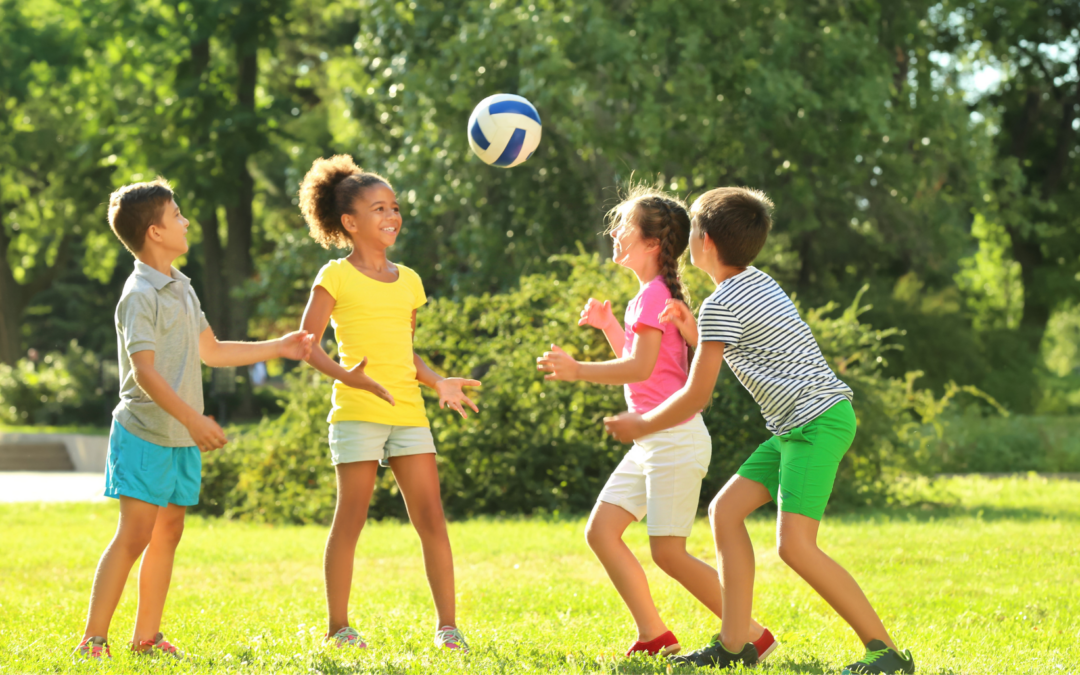
The backdoor swings open. Shoes hit the porch. And suddenly there’s grass underfoot, sun overhead, and a whole unstructured afternoon stretching out ahead.
Kids playing outside don’t know they’re learning. They think they’re just running, climbing, negotiating the rules of a made-up game that changes every five minutes. But what’s actually happening underneath all that noise and movement is remarkable.
Social skills are being built in real time. Communication is being tested and refined. Emotional regulation is being practiced in ways no classroom can replicate. And for children receiving ABA therapy, that outdoor environment isn’t a break from learning. It’s one of the richest learning environments available.
Here’s why it matters, and how to use it intentionally.
What Is the 10-10-10 Rule for Kids?
The 10-10-10 rule is a simple outdoor time guideline that’s gained traction among child development specialists and parents alike. The idea is that children benefit from spending time outside across three distinct conditions: 10 minutes in the morning, 10 minutes at midday, and 10 minutes in the evening.
The thinking behind it isn’t just about physical health. It’s about rhythm and regulation.
Morning outdoor time helps children transition from sleep into alertness. Natural light regulates circadian rhythms and sets the body’s internal clock in ways artificial lighting simply doesn’t. For kids who struggle with emotional dysregulation — which is closely tied to social difficulty — starting the day with fresh air and movement can meaningfully improve how they handle interactions throughout the day.
Midday outdoor time breaks up cognitive load. After hours of focused attention, kids playing outside for even a brief window reset their capacity to engage. They return to learning more regulated, more receptive, and more socially available.
Evening outdoor time helps wind the nervous system down. Movement and open space assist in processing the sensory and social input accumulated throughout the day.
For children in ABA programs, this rhythm matters. Regulated children learn better. They communicate more effectively. They’re more available for the social practice that builds skills over time. The 10-10-10 rule isn’t magic. But it reflects something real about how outdoor time and nervous system regulation work together.
Why Is It Important for a Child to Play Outside?
The research on this is consistent and compelling. Kids playing outside develop differently than kids whose time is primarily spent indoors.
Physical development creates social opportunity. Running, climbing, balancing, throwing — these aren’t just motor skills. They’re social currency. A child who can kick a ball competently gets invited into games. One who can climb confidently joins the group at the top of the structure. Physical competence opens social doors.
Unstructured outdoor time demands communication. Inside environments — classrooms, therapy rooms, living rooms — are typically structured by adults. Rules are set. Activities are organized. Outside, kids playing outside have to figure it out themselves. Who goes first? What the boundaries are. What happens when someone breaks the rules? Every one of those negotiations is a communication and social skills exercise happening organically.
Nature reduces anxiety. Multiple studies have found that time in natural environments lowers cortisol levels in children. Lower anxiety means greater social availability. Kids who are less anxious take more social risks. They approach new children. They try to join games. They tolerate the uncertainty of unscripted interaction better.
Sensory input is regulating. For children with sensory processing differences — common among kids receiving ABA therapy — outdoor environments offer proprioceptive and vestibular input that helps regulate the nervous system. A child who has just run, climbed, and rolled down a hill is often calmer, more focused, and more socially accessible than one who has been sitting still.
Peer relationships form naturally outside. There’s something about kids playing outside together that accelerates relationship formation. Shared physical experience. Joint problem-solving. The bond that forms when you help someone up after they fall or invite someone into a game you invented. These moments create connection in ways that structured activities rarely replicate.
In ABA specifically, outdoor environments allow skills practiced in sessions to generalize to real-world settings. Generalization — taking what’s learned in one context and applying it in others — is a core goal of ABA therapy. Outside is one of the most important generalization environments available.
Is It Good for Kids to Play Outside All Day?
The short answer is: mostly yes, with some thoughtful considerations.
Kids playing outside all day, particularly during long summer stretches, is genuinely good for development in most cases. The physical activity, social interaction, and unstructured time all contribute positively to growth. For generations, this was simply childhood. And child development outcomes weren’t worse for it.
But a few things are worth keeping in mind.
Fatigue affects regulation. A child who has been outside for six hours and is exhausted, overheated, and hungry is not socially learning anymore. They’re surviving. Knowing your child’s window of tolerance — how long they can engage before they start to fall apart — helps you structure outdoor time so it stays productive rather than deteriorating into meltdowns.
Some children need recovery time. Introverted children and those with sensory sensitivities may find extended social outdoor time genuinely draining. This doesn’t mean they shouldn’t be outside. It means building in quiet recovery periods matters. Outdoor time doesn’t have to mean constant group interaction. Reading under a tree, drawing on the porch, observing nature alone — these are valid outdoor experiences that restore rather than deplete.
Structure still has a role. Completely unstructured outdoor time is valuable. But for children who struggle significantly with social initiation or peer interaction, pure free play can become extended isolation rather than practice. A mix of structured activities and free exploration tends to work better than either extreme alone.
For children in ABA programs, the goal isn’t maximum outdoor hours. It’s quality outdoor experience with the right level of support. Kids playing outside with intentional coaching available learn more than kids simply left to figure it out unsupported.
What Are Some Fun Activities for Kids Outside?
The best activities are the ones that build social and communication skills without feeling like therapy. Here’s what actually works.
Classic ball games. Catch, kickball, four square. These require reading body language, timing communication, taking turns, and managing competitive emotions. The repetition is the point. Every throw is practice.
Water play. Sprinklers, water balloons, a shallow paddling pool. Water play is inherently collaborative and joyful. It creates natural opportunities for kids playing outside to negotiate, share resources, and laugh together — one of the most underrated social bonding mechanisms available.
Nature scavenger hunts. Give kids a list of things to find. A smooth rock. Something yellow. A bug. Something that makes a sound. Done in pairs or small groups, scavenger hunts require communication, negotiation, and shared problem-solving. Done individually, they build observation skills and independent engagement with the environment.
Building projects. Sandcastles at the beach. Forts from sticks and leaves. Mud constructions. Kids playing outside and building together develop collaborative communication skills that are difficult to manufacture in indoor settings. There’s a shared goal, a need to delegate, and a product everyone contributes to.
Obstacle courses. Set one up with whatever’s available. A crawl-through, a balance section, something to jump over. Kids naturally begin timing each other, coaching each other, cheering. The structure creates interaction even between children who wouldn’t naturally initiate it.
Gardening. Planting seeds, watering, watching things grow. Slow, quiet, and surprisingly rich for communication. Talking about what’s happening. Asking questions. Working side by side in a shared project. It also teaches patience in a concrete way — something valuable for children who struggle with frustration tolerance.
Neighborhood games. Hide and seek. Freeze tag. Red light, green light. These games have been doing heavy social and communication lifting for children for generations. The rules are simple. The social demands are significant. Kids playing outside in these formats practice turn-taking, rule-following, reading others, and managing the full emotional range from winning to losing.
Taking It Further
For children in ABA programs, outdoor time isn’t a supplement to therapy. It’s an extension of it. Every moment of kids playing outside together is an opportunity to practice and generalize the skills being built in sessions.
The grass, the sunshine, the chaos of unscripted interaction — these are the real classroom.
If your child is working on social and communication skills and you want support using everyday environments like outdoor play as part of their development, contact Hybridge. We help families integrate ABA principles into real life, in real settings, where the learning that matters most actually happens.
Interested In More Hands On Support?
Hybridge Learning Group serves families and learners of all ages in New Jersey, Delaware, Maryland, and Virginia.
Autism · ABA Therapy · Occupational Therapy · Speech Therapy · School Support
Here To Help
Hybridge Learning serves families and learners of all ages in New Jersey, Delaware, Maryland, and Virginia.
Phone: (855) 796-7518
Fax: (908) 271-7110
Email: services@hybridgelearning.com
Website Quick Links
About Hybridge Learning
Locations
Services
Resources
Careers
Getting Started
Get Started
Our team is here to make getting started easy every step of the way. The first step is filling out our contact form & scheduling a free consultation to chat with our team.