
Written by Hybridge Learning
ABA specialists serving New Jersey, Delaware, Maryland, and Virginia, helping kids build the social skills that turn new classrooms into new friendships.
Meet the Hybridge Learning ABA team
Kids can learn how to make friends at school by practicing specific social skills, such as starting conversations, joining activities, taking turns, noticing another child’s cues, and keeping an interaction going. For children with autism, these skills may need direct teaching and repeated practice rather than developing automatically through exposure to other children. A new school year can provide a natural opportunity to practice because seating charts, classrooms, activities, and peer groups are changing anyway.
Key Takeaways
- Friendship skills can be taught and practiced.
- Starting a conversation is only one part of making friends.
- Lunch, recess, and group work offer natural practice opportunities.
- Parents can coach specific social behaviors without taking over.
- Social skills groups can provide structured practice with peers.
- ABA providers can teach and generalize friendship skills across real settings.
Table of Contents
- Why Is Making Friends at School Hard for Some Kids?
- What Skills Actually Go Into Making a Friend?
- Why Does the Start of a New School Year Make This Harder, or Easier?
- How Can Parents Coach Their Child Through Lunch, Group Work, and Recess?
- How Can Parents Help Their Child Reconnect With Old Friends After Summer?
- How Can ABA Providers Help Build These Skills Directly?
- Frequently Asked Questions
Why Is Making Friends at School Hard for Some Kids?
Making friends at school can be difficult when a child has trouble noticing social cues, starting interactions, responding to peers, or knowing how to keep an interaction going. A child may want friends but still struggle to turn that interest into a back-and-forth relationship.
For a child with autism, the challenge may look different from what adults expect. A child might stand near a group without knowing how to enter the game, talk at length about a favorite interest without noticing that a peer wants to change the subject, or wait for another child to initiate every interaction.
Research on social functioning in autism describes differences in social communication and interaction that can affect peer relationships and participation. Social difficulties can also vary widely from child to child, which is why a useful friendship plan should focus on the specific skill that is getting in the way rather than assuming every child needs the same intervention.
The goal is not to make a child act like everyone else. The goal is to help the child communicate, participate, and build relationships in ways that are meaningful and comfortable for the child.
What Skills Actually Go Into Making a Friend?
Making a friend requires several smaller social skills that can be taught individually and then practiced together. A child may need to learn how to approach a peer, start a conversation, share an activity, take turns, respond to another person’s ideas, and recognize when the interaction should end.
Starting a conversation is one useful skill, but it is not the whole process. A child also needs a way to answer when a peer responds, ask a follow-up question, make a related comment, and notice whether the other child is interested. Research on social skills and peer interaction in children with autism supports the importance of teaching these social behaviors directly rather than assuming they will develop through exposure alone.
Joining an activity is another important skill. A child might practice watching what other children are doing, moving closer to the activity, asking to join, and accepting the answer if the group is not ready for another player.
Friendship also involves flexibility. Children need opportunities to practice sharing materials, changing plans, handling a small disagreement, and finding another activity when a peer says no.
Parents can make these skills easier to practice by choosing one behavior at a time. For example, instead of saying, “Go make a friend,” a parent might practice one concrete goal such as, “Ask one child what game they are playing.”
“Making friends is a skill that kids can learn and practice, just like any other skill. We give our clients opportunities to practice things like joining a game, starting a conversation, taking turns, and figuring out what to do when things don’t go as planned.” – Danielle Fellman, Lead Clinical Director
Why Does the Start of a New School Year Make This Harder or Easier?
The start of a new school year can make friendship-building harder because familiar routines and peer groups often change, but the same reset can create new opportunities for connection. A new classroom can put children beside peers they did not regularly interact with the previous year.
A child who had one reliable friend may suddenly have a different seat, lunch table, teacher, or recess group. That change can feel disruptive even when the new classroom is a positive environment.
The first few weeks can also give parents and teachers useful information. Watch for patterns rather than judging the entire year from one difficult day. A child who eats alone once may simply be adjusting, while a repeated pattern of avoiding peers or being left out may signal a skill or support need.
Families can prepare before school starts by practicing simple social situations at home. Role-play can include saying hello, asking to join a game, responding to a question, choosing a shared activity, and ending a conversation.
A child does not need to memorize a script for every possible interaction. Practice should give the child a few reliable tools that can be adapted to different classmates and situations.
How Can Parents Coach Their Child Through Lunch, Group Work, and Recess?
Parents can coach friendship skills by breaking common school situations into small behaviors and practicing those behaviors before the child needs them. Lunch, group work, and recess are especially useful because each setting creates natural opportunities for peer interaction.
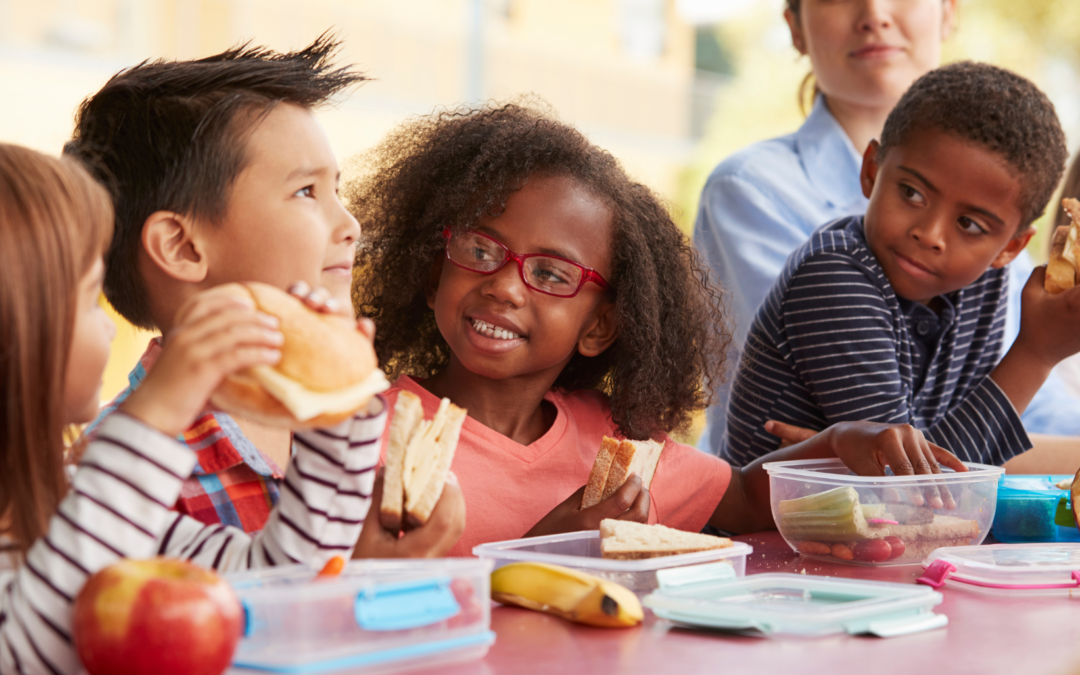
At lunch, a child can practice looking for a familiar peer, choosing a seat nearby, saying hello, and asking a simple question. The question could be about something already happening, such as a class activity, a game, or what the peer is doing after school.
Group work provides a different opportunity because the activity already gives children something to talk about. A child can practice asking, “What part should I do?” or offering, “I can write this part,” instead of having to invent a conversation from nothing.
Recess can require more flexible social thinking. A child may need to watch what other children are doing, identify an activity that looks interesting, ask to join, and switch activities when the first option does not work.
Parents should keep coaching brief and specific. A five-minute practice before school can be more useful than a long lecture about making friends.
Hybridge Learning also offers guidance on building friendships on the school playground, including ways ABA students can practice social interaction in a setting that looks much more like the real school day.
How Can Parents Help Their Child Reconnect With Old Friends After Summer?
Parents can help a child reconnect with old friends by creating a simple opportunity to interact again instead of assuming the friendship will automatically restart. A short playdate, shared activity, or conversation about a common interest can give both children an easy starting point.
Keep the first interaction low-pressure. Children may have changed during the summer, and an old friendship may need to find a new rhythm rather than returning exactly where it left off.
Parents can also help the child identify what made the friendship enjoyable before. Maybe the children played a particular game, traded jokes at lunch, talked about a favorite subject, or worked well together on classroom activities.
If the old friendship does not resume, that does not mean the child failed. School friendships change for many reasons, and helping a child develop several ways to connect with peers can be more useful than focusing on one specific friendship.
A parent can also coordinate with the teacher when appropriate. A teacher may know which classmates share the child’s interests or which classroom activities naturally create opportunities for cooperation.
How Can ABA Providers Help Build These Skills Directly?
ABA providers can help children build friendship skills by identifying specific social behaviors, teaching those behaviors directly, practicing them repeatedly, and helping the child use them in different settings. The exact goals should be based on the child’s individual needs rather than a generic social-skills checklist.
A BCBA may begin by observing what happens during a difficult interaction. The child may know how to answer a question but struggle to initiate one, or the child may approach peers successfully but have difficulty maintaining a reciprocal conversation.
The provider can then turn that observation into a measurable skill. A goal might involve initiating an interaction, responding to a peer, taking turns during an activity, or appropriately requesting to join a group. Research on social-skills interventions for children with autism supports structured approaches that teach and practice specific social behaviors.
Practice should not stop when the child succeeds in a therapy session. The important question is whether the child can use the skill with different people and in different places, such as during ABA therapy, at home, at school, or in the community.
Hybridge Learning’s approach can connect social-skill practice to the environments where those skills matter. Families can also learn more about autism social skills groups and how they can benefit children when structured peer practice is appropriate.
A useful friendship goal is also realistic. The goal does not have to be “make five friends.” A more meaningful goal might be helping a child initiate one peer interaction during recess, participate in a group activity, or maintain a short back-and-forth conversation.
If your child struggles to make or keep friends at school, contact Hybridge Learning to talk with our team about building social skills in the settings where they actually count.
FAQ
Is it normal for a child to have only one friend?
Yes, having one close friend can be completely typical and does not automatically indicate a social problem. The more important question is whether the child is satisfied with the relationship and can participate in social situations in a way that works for the child.
What if my child says they don't want friends?
A child who says they do not want friends may be communicating many different things, so parents should look at the context before assuming the child truly wants no social connection. The child may be avoiding friendship because previous interactions felt confusing, exhausting, unsuccessful, or uncomfortable.
How do I know if my child's struggle is social skills versus anxiety?
A child’s pattern across different situations can provide useful clues, but parents should not try to diagnose anxiety from social behavior alone. A child may have the social skills but avoid using them because social situations feel frightening, while another child may want to participate but not know what to say or do.
Should I contact the teacher about my child's friendships?
Parents should consider contacting the teacher when friendship difficulties are persistent, affect the child’s participation or well-being, or appear to involve repeated exclusion or conflict. A teacher can often provide information about classroom interactions that parents cannot see and may identify natural opportunities for positive peer connections.
Do social skills groups actually help, or is this better handled one-on-one?
Social skills groups can provide valuable practice when the group is appropriately matched to the child’s needs and includes meaningful opportunities to interact with peers. One-on-one instruction can be useful for teaching a specific skill, while group practice can help a child learn to use that skill with other children.
About Hybridge Learning
Hybridge Learning provides individualized ABA therapy for children with autism and related developmental needs throughout New Jersey, Delaware, Maryland, and Virginia. Services include center-based therapy, in-home ABA, school district collaboration, and parent training. What sets Hybridge Learning apart is teaching social skills in real settings, such as lunch tables and group work, not just in a therapy room, so the skills a child learns can carry into the school day.
Interested In More Hands On Support?
Hybridge Learning Group serves families and learners of all ages in New Jersey, Delaware, Maryland, and Virginia.
Autism · ABA Therapy · Occupational Therapy · Speech Therapy · School Support
Here To Help
Hybridge Learning serves families and learners of all ages in New Jersey, Delaware, Maryland, and Virginia.
Phone: (855) 796-7518
Fax: (908) 271-7110
Email: services@hybridgelearning.com
Website Quick Links
About Hybridge Learning
Locations
Services
Resources
Careers
Getting Started
Get Started
Our team is here to make getting started easy every step of the way. The first step is filling out our contact form & scheduling a free consultation to chat with our team.