
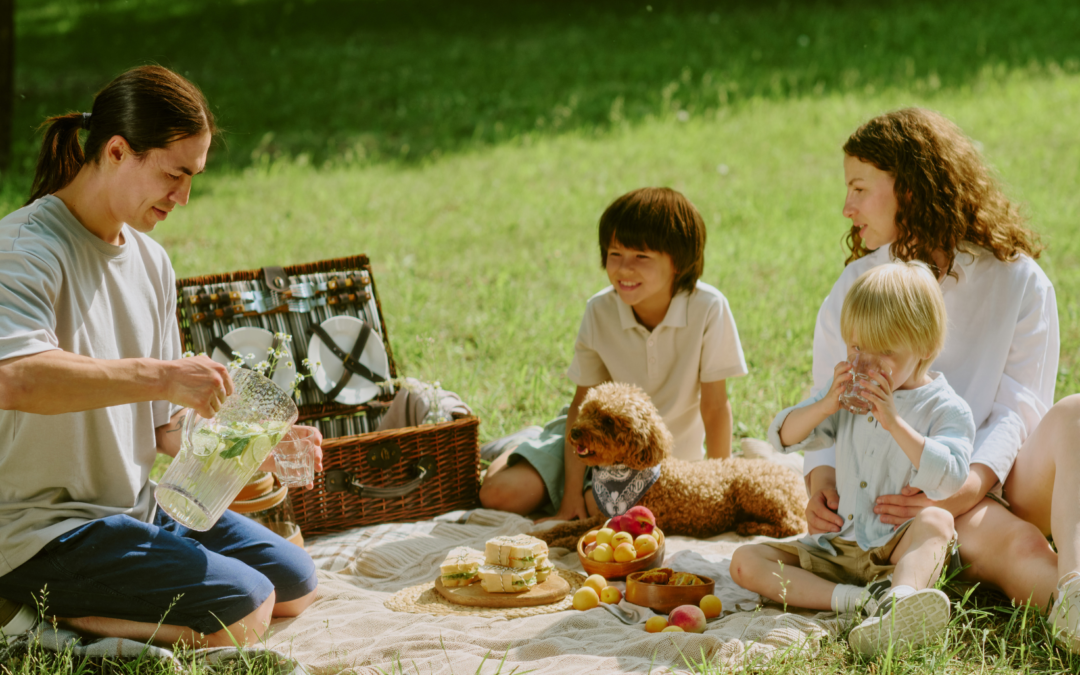
The blanket is spread. The food is out. Cousins are chasing each other around the oak tree while grandpa tries to keep the paper plates from blowing away.
A family picnic is chaos. Beautiful, loud, unscripted chaos.
And for children who struggle with social skills, that chaos is actually a classroom.
Because the same setting that feels relaxed and low-stakes to adults is full of rich, real-time opportunities for kids to practice the communication and turn-taking skills they need to build lasting friendships. The trick is knowing how to use it intentionally.
What Is a Family Picnic?
A family picnic is an informal outdoor meal shared with people your child already knows and trusts. Backyard. Local park. Beach. It doesn’t matter much where. What matters is who’s there and what’s happening.
Unlike birthday parties or school events, a family picnic carries no performance pressure. Nobody’s being graded. There’s no structured agenda. Kids move freely between adults and other children. Conversations start and stop naturally. Games appear and dissolve without anyone organizing them.
That informality is exactly what makes it valuable.
For children who struggle socially, formal settings can feel overwhelming. Too many strangers. Too many rules they don’t understand. Too much pressure to get it right. A family picnic lowers the stakes dramatically. The people are familiar. The environment is forgiving. If something goes wrong socially, it’s safe to recover and try again.
This is where social learning happens most naturally. Not in therapy rooms with worksheets. In real settings, with real people, navigating real moments.
What to Eat at a Family Picnic?
Food choices matter more than you’d think when social skill-building is the goal.
Finger foods and shared platters create natural turn-taking moments. A bowl of strawberries passed around the blanket. A plate of sandwiches everyone reaches into. Serving yourself from shared containers requires noticing others, waiting your turn, asking before taking the last piece. Small moments. Significant practice.
Good options that encourage sharing and interaction:
Shareable foods like watermelon slices, grapes, cheese and crackers, veggie sticks with dip, and chips. These create organic “can I have some?” and “do you want more?” exchanges that build conversational back-and-forth.
Foods that require cooperation like assembling their own wraps or building their own sandwiches from shared ingredients. Two kids reaching for the same ingredient. One waiting. One offering. Natural negotiation happening without anyone manufacturing it.
Treats that need dividing like a whole watermelon or a tray of brownies. Who cuts it? Who gets first pick? How do you make sure everyone gets some? These moments are socially loaded in the best way.
Avoid individually packaged meals where each child gets their own separate box and there’s nothing to share. The sharing is the point.
What to Bring on a Family Picnic?
Packing intentionally transforms a regular outing into a skill-building session.
For the meal: A large blanket big enough for everyone to sit together. Shared serving bowls rather than individual containers. A simple cooler with drinks everyone reaches into. Reusable cups kids can refill for each other — another natural opportunity to notice someone’s needs and respond.
For structured play: A few specific items work better than a bag of random toys.
A ball. Simple. Requires passing. Taking turns. Reading when someone’s ready to catch. Adjusting your throw to different people’s abilities. Every throw and catch is a communication exchange.
A card game or simple board game. Go Fish. Uno. Even a basic matching game. Turn-taking is literally built into the structure. Kids practice waiting, paying attention, managing the frustration of losing, and celebrating appropriately when they win. These are hard skills. Card games practice them repeatedly in a context that feels fun, not therapeutic.
Sidewalk chalk if there’s a paved area nearby. Drawing side by side creates parallel play that naturally evolves into collaborative storytelling. “That’s a dragon.” “Mine is chasing it.” Suddenly they’re co-creating a narrative.
What not to bring: Individual screens. The moment devices appear, interaction stops. The whole social opportunity disappears.
How to Have a Family Picnic?
The family picnic itself is straightforward. The intentionality underneath it is what creates the learning opportunity.
Choose the right setting. Parks work well because they offer both open space for running and contained areas for sitting together. Somewhere with a bit of shade, minimal distractions, and enough room that kids can move around without feeling cooped up.
Sit together intentionally. Resist the urge to let kids drift to one corner while adults sit separately. Integrated seating — kids mixed in with adults — creates richer interaction opportunities. Children practice talking to different people. They hear how adults have conversations. They get real-time modeling of communication skills without anyone making it a lesson.
Coach in real time. Quietly. This is the most important part. If your child is hovering on the edge of a cousin’s game, don’t wait and hope. Gently prompt: “It looks like they’re playing catch. You could ask if you can join.” If they interrupt a conversation, a quiet word in the moment is more effective than a debrief an hour later. Real-time feedback connects the coaching directly to the experience.
Create natural turn-taking moments. A family picnic offers countless chances to build this in:
- Go around the blanket asking everyone what the best part of their week was. Practice waiting. Practice listening. Practice responding to what someone else said.
- Organize a simple team game like a relay race or tug of war. Teams require cooperation. Winning and losing require emotional regulation. Both require reading other people.
- Let kids take turns choosing the next activity. One chooses. Others follow. Then it rotates. This builds the skill of deferring to others — something that doesn’t come naturally to every child.
Let conflict happen. Two kids want the same spot on the blanket. Someone feels like the game isn’t fair. The bag of chips is almost empty and three people want the last handful. Don’t rush to resolve every conflict. Give children space to attempt resolution themselves. Step in when needed, but aim to coach rather than fix. “What could you two figure out together?” builds more than “Here, you each take half.”
Debrief later, not immediately. On the drive home or at bedtime, revisit what happened. Not as a performance review. As a curious conversation. “I noticed you waited a really long time for your turn at the game. That was hard. How did you handle it?” “What was your favorite part of today?” “Was there anything that felt tricky?” This reflection deepens the learning that happened in the moment.
Keep it consistent. One family picnic is a nice afternoon. A regular family picnic — monthly, every few weeks through spring and summer — becomes a reliable social practice ground. Kids know what to expect. Familiarity reduces anxiety. And repeated practice with the same people lets you track actual progress over time.
The Bigger Picture
A family picnic won’t fix social struggles on its own. But it’s exactly the kind of real-world, low-stakes, familiar environment where the skills your child is building can get practiced, tested, and strengthened.
The blanket. The shared food. The chaos of cousins running. These aren’t distractions from social learning. They’re the whole point.
If your child struggles with communication, turn-taking, or navigating peer interaction, contact Hybridge. We help children develop the social skills they need — not in isolation, but in the real situations where those skills actually matter.
Interested In More Hands On Support?
Hybridge Learning Group serves families and learners of all ages in New Jersey, Delaware, Maryland, and Virginia.
Autism · ABA Therapy · Occupational Therapy · Speech Therapy · School Support
Here To Help
Hybridge Learning serves families and learners of all ages in New Jersey, Delaware, Maryland, and Virginia.
Phone: (855) 796-7518
Fax: (908) 271-7110
Email: services@hybridgelearning.com
Website Quick Links
About Hybridge Learning
Locations
Services
Resources
Careers
Getting Started
Get Started
Our team is here to make getting started easy every step of the way. The first step is filling out our contact form & scheduling a free consultation to chat with our team.