
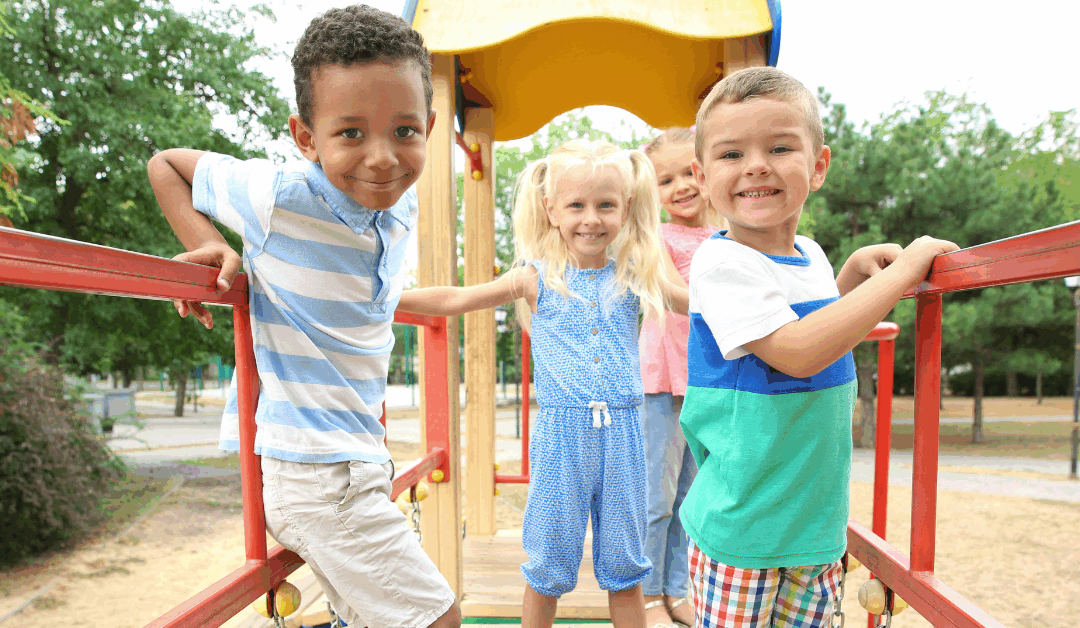
For many children, the school playground is more than just a place to burn off energy—it’s the heart of their social world. It’s where games of tag spark laughter, where friendships begin with a shared swing, and where kids learn the give-and-take of cooperation.
But for children receiving ABA therapy or those with autism, the school playground can feel like both an opportunity and a challenge.
Parents and teachers often wonder: How can we help ABA students feel confident and included in this important space?
At Hybridge, we believe the school playground is one of the best natural environments for practicing social skills. With the right support, it can transform from a place of uncertainty into a safe and joyful hub of connection.
In this guide, we’ll explore why the school playground matters, the challenges ABA students might face, and how ABA strategies—combined with the support of parents and teachers—can help children thrive.
Why is the school playground such an important place for ABA students to practice socializing?
The school playground is more than just swings, slides, and monkey bars. It’s a natural classroom for learning life skills. Unlike the structured environment of a classroom, recess is filled with unplanned interactions. Kids make quick decisions: Who to play with? What game to start? How to join a group already playing?
For ABA students, the school playground provides:
- Real-world practice: It’s an authentic space where children can apply the communication and social skills they learn in therapy.
- Opportunities for independence: Unlike classroom work guided by teachers, playground play is more child-led, giving students a chance to build autonomy.
- Emotional growth: Navigating conflicts, sharing, and making friends fosters resilience and confidence.
- Community belonging: Feeling included during recess reinforces the sense of being part of the larger school community.
When parents ask why the school playground is important, the answer is simple: it’s where the seeds of social growth are planted, watered, and nurtured every day.
What challenges might ABA students face when trying to build friendships on the playground?
While the school playground is rich with opportunity, it can also bring challenges for ABA students. These challenges don’t mean kids can’t succeed—it just means they may need more support to thrive.
Some common hurdles include:
- Unstructured play: Without clear rules, it can be hard for some children to understand how to join in.
- Group dynamics: Entering a game already in progress or negotiating roles may feel overwhelming.
- Communication barriers: Children with limited verbal skills may struggle to express interest in joining or to respond quickly in fast-moving play.
- Sensory overload: The noise, movement, and energy of the playground can feel intense, making it harder to focus on social connections.
- Fear of rejection: Past experiences of being left out can make children hesitant to try again.
Recognizing these challenges helps parents, teachers, and peers approach the school playground with empathy. It also highlights why structured support matters so much.
How can ABA strategies help kids engage with peers during recess and free play?
Applied Behavior Analysis (ABA) strategies are designed to break skills into small, achievable steps—and the school playground is a perfect setting to apply them.
Here are a few ways ABA therapy helps:
- Social Scripts and Role Play: Before recess, therapists and teachers can practice common playground scenarios—like asking, “Can I play?”—so the child feels prepared.
- Peer Modeling: Watching classmates model positive social behaviors helps ABA students see what’s expected and how to join in.
- Prompting and Reinforcement: Adults can provide gentle prompts to encourage engagement (“Try asking what game they’re playing”) and reinforce successes with praise or small rewards.
- Breaking Down Games: ABA therapists often teach the steps of common playground activities—like taking turns in jump rope—so kids can participate with confidence.
- Generalization: Skills learned in therapy sessions can be practiced during recess, helping kids transfer lessons from structured learning into real-world contexts.
By using ABA strategies, the school playground becomes less intimidating and more inviting—a place where students can take small risks, succeed, and build friendships step by step.
What can parents and teachers do to support positive social interactions on the school playground?
Parents and teachers play a powerful role in making the school playground a safe and welcoming space for ABA students. Here are some ways to help:
1. Prepare in Advance
- Talk about recess routines at home: “First you’ll line up, then you can choose an activity.”
- Practice simple playground games together so the child feels comfortable with the rules.
2. Facilitate Peer Connections
- Teachers can pair ABA students with a buddy during recess to ease entry into group play.
- Encourage classmates to invite children into games with clear, simple instructions.
3. Observe and Support
- Adults should watch for moments when a child is struggling and offer gentle guidance—without taking over.
- Reinforce even small successes, like standing near a group or trying to join in, as these are important steps.
4. Create Inclusive Options
- Schools can provide structured activities (like a jump rope station or ball games) that give ABA students a clear entry point.
- Visual supports, like playground schedules or choice boards, help reduce anxiety about what to do next.
5. Celebrate Progress Together
- Parents and teachers should communicate about successes and challenges, creating consistency between home and school.
- Recognize milestones, whether it’s playing with one peer or joining a larger group.
By working together, parents and teachers make the school playground a bridge—not a barrier—to social development.
Why the school playground matters
For ABA students, the school playground is more than recess—it’s a stage for practicing the skills that will carry them through life. From learning to ask a peer to play, to managing the ups and downs of group dynamics, these early moments shape how children see themselves in relation to others.
When supported with empathy, structure, and ABA strategies, the school playground becomes a space of growth and joy. It’s where children can learn not just to play—but to belong.
Final Thoughts: Turning Playtime Into Connection
At Hybridge, we remind families that playtime isn’t just “extra time.” For ABA students, the school playground is a vital opportunity for learning, bonding, and building the friendships that make childhood so rich.
When parents ask, How can I help my child connect on the school playground?—our answer is that it takes patience, teamwork, and the right strategies. ABA therapy gives kids the tools, but it’s the collaboration between families, teachers, and peers that makes those tools shine.
Because every child deserves to feel the joy of running across the school playground, hearing their name called in a game, and knowing they belong.
Interested In More Hands On Support?
Hybridge Learning Group serves families and learners of all ages in New Jersey, Delaware, Maryland, and Virginia.
Autism · ABA Therapy · Occupational Therapy · Speech Therapy · School Support
Here To Help
Hybridge Learning serves families and learners of all ages in New Jersey, Delaware, Maryland, and Virginia.
Phone: (855) 796-7518
Fax: (908) 271-7110
Email: services@hybridgelearning.com
Website Quick Links
About Hybridge Learning
Locations
Services
Resources
Careers
Getting Started
Get Started
Our team is here to make getting started easy every step of the way. The first step is filling out our contact form & scheduling a free consultation to chat with our team.